

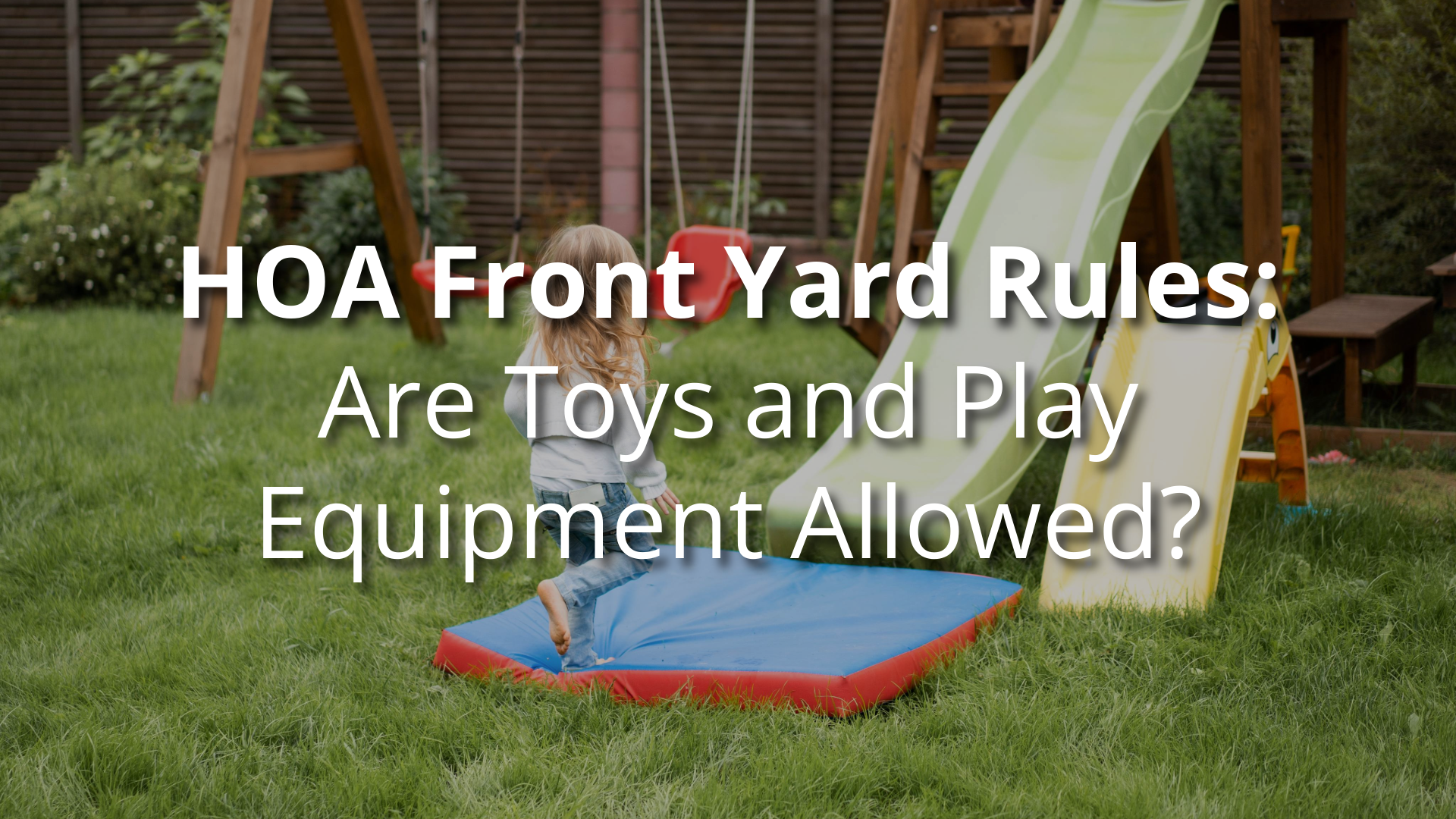
Kids’ bikes in the grass, a plastic kitchen on the porch, a basketball hoop by the driveway – for many families, that is just everyday life.
In an HOA community, though, those moments can turn into questions: Are toys allowed in the front yard at all, and do they really have to be put away every night?
Most homeowners are not trying to break HOA front yard rules. They are juggling kids, work, and limited storage. At the same time, the HOA is responsible for safety, curb appeal, and property values.
That is where clear HOA property rules and communication matter. Here is why these rules exist, what typical HOA toy regulations cover, and how boards can respond in a fair, thoughtful way.
1. Why HOAs Have Rules About Toys and Front Yards
Safety and access
Unattended toys with wheels, like scooters, bikes, wagons, or ride-on cars, can cause falls, especially at night. Toys or large items that block sidewalks, driveways, or walkways can also slow down police, fire, or medical crews. Clear paths are a safety issue, not just a cosmetic preference.
Curb appeal and property values
Scattered toys, broken equipment, and overflowing porches change how the community feels to residents and future buyers. One cluttered yard on an otherwise tidy street can quickly become a sore point.
Fairness and consistency
If one home constantly leaves toys out, others may follow, and expectations slowly slip. Written HOA front yard rules give the board something neutral to point to so decisions feel consistent instead of personal.
The goal is balance: protecting safety and appearance without making families feel like children are a problem.
2. What HOA Toy Regulations Typically Allow (and Restrict)
Every community’s documents are different, but most HOA toy regulations follow a few familiar patterns.
Small toys, bikes, and scooters
These are the most common source of complaints. Many HOAs:
- Allow toys while they are being used
- Require toys, bikes, and scooters to be stored out of sight when not in use
- Expect items to be brought in by evening
Even if toys are not named specifically, they often fall under rules about “personal items,” “yard clutter,” or “visible storage” in your HOA property rules.
A simple guideline boards can share is: enjoy the front yard during the day, then bring toys and gear into the garage, porch storage, or backyard when playtime is over.
Larger play equipment and sports gear
Playsets, trampolines, and basketball hoops usually come with extra conditions, such as:
- Architectural approval before installation
- Keeping permanent equipment in backyards
- Making sure nothing blocks sidewalks or shared drive lanes
Portable hoops or nets are often allowed as long as they are in good condition and not left out for long periods.
Many communities use a “back yard or neatly stored” standard for big items, and a “use it today, put it away tonight” standard for seasonal toys like kiddie pools and water tables.
3. How Boards Can Handle Toy Complaints Fairly
Toy issues are rarely just about plastic on the lawn. One neighbor may see “clutter,” another sees “happy kids.” The board’s role is to focus on the rule, not the emotion.
Check the rule first
Before sending any notice, identify the exact section of the CC&Rs or rules that applies and confirm that toys are covered, either specifically or under general clutter/visible storage. If the rule is vague, the board may need to refine the language so expectations are easier to understand.
Consider the context
Ask whether this is a one-time oversight or a pattern of ongoing clutter, and whether there are mobility or special needs that make certain equipment necessary near the front of the home.
Start with education, then enforce consistently
Often, a friendly reminder is enough. Reference the specific HOA front yard rule, explain the “why” in simple language, and invite questions. If the issue continues, the board can move to written violations or fines where allowed by the documents and state law. The key is applying the same HOA property rules the same way to every owner.
When possible, point residents toward positive options: using common-area playgrounds, storing large toys in backyards, and joining conversations about updating HOA toy regulations.
Helping Families Play While Protecting the Community
Toys in front yards may look like a small detail, but they touch big themes: safety, appearance, fairness, and how we live alongside one another.
Clear, family-aware HOA front yard rules give everyone a common starting point and protect property values, while still allowing kids to be kids. When boards enforce those rules with empathy and consistency, they build trust instead of tension. If your board is wrestling with toy policies or front yard standards, you do not have to sort it out alone. Creative Management Company can help you review and update toy rules, design fair enforcement processes, and communicate expectations in ways homeowners can follow. To bring clarity and compassion to your HOA’s toy rules, contact Creative Management Company to talk about what would work best for your community.